Pyramids, Passages, and the Lost Labyrinth of Egypt
Egypt Travel Blog 2025: Day 3

The Giza Plateau isn’t the only location in which recent scans have shown there to be great cavernous areas underground. Scan at the Egyptian Labyrinth at Hawara have also there to be huge unexplored areas underground, and we were able to visit the site during our second day of the Stargates of Ancient Egypt tour. With an itinerary that also included pyramids at Faiyum and Maydum, it was already set to be an amazing day, but fellow researcher and explorer Trevor Grassi also joined us for the excursion, making this an incredible journey on multiple levels.
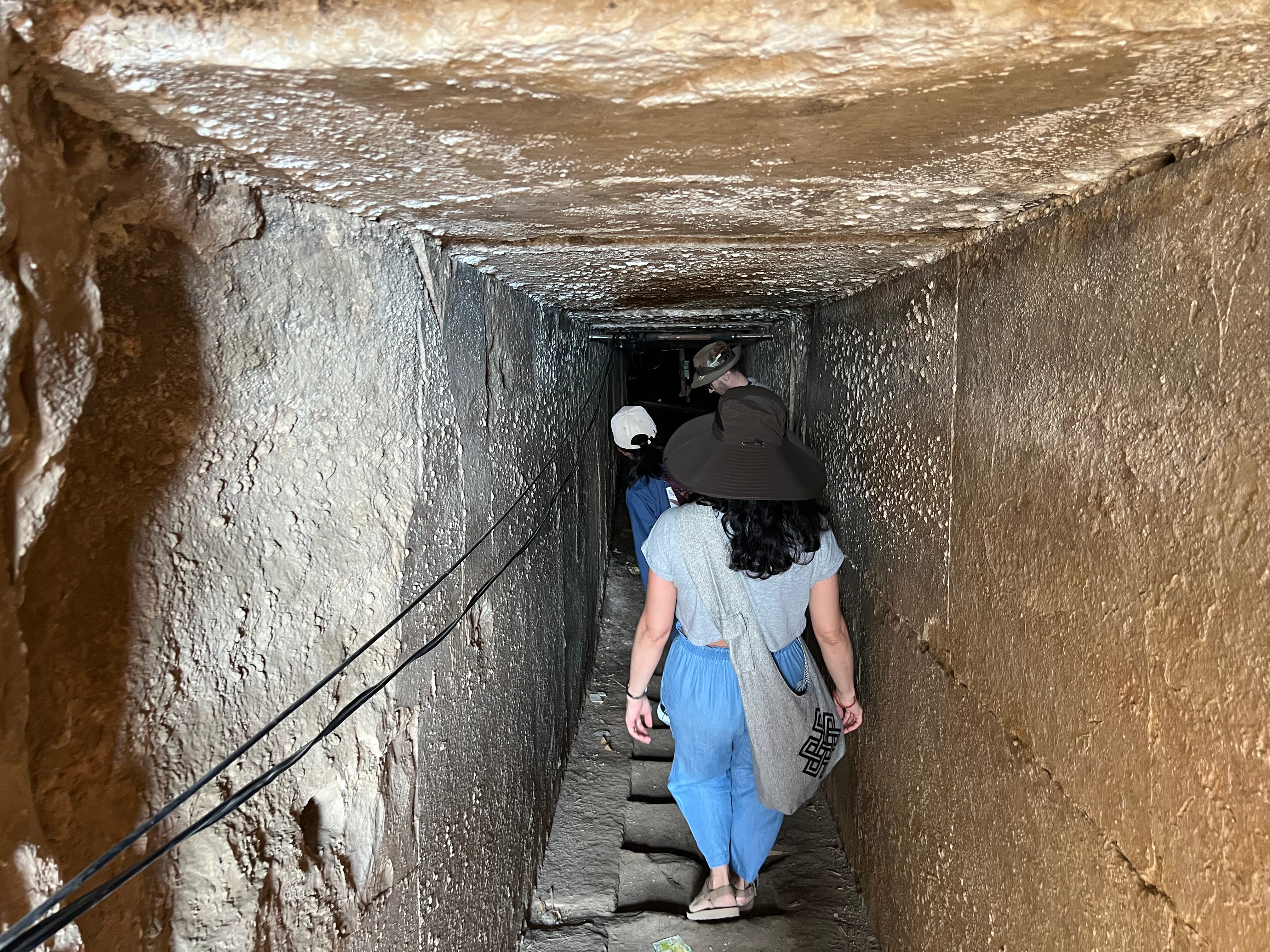
Back in May, I posted an article about the Egyptian Labyrinth, scans conducted by Merlin Burrows, and research conducted by Louis de Cordier and the Mataha expedition (I highly recommend reading Louis’s articles on the subject), so I was highly anticipating this particular day of the tour. While I might be hosting the tour along with our guide, Mohamed Ibrahim, I am always also simultaneously researching the sites we visit, so guests will always see me poking around and recording video. I ran as much video as I could at the site, and Trevor was doing the same. I wasn’t expecting we’d light up torches and venture down into the labyrinth itself, but I was excited to explore a site many others don’t and get a feel for it. Hawara definitely didn’t disappoint.
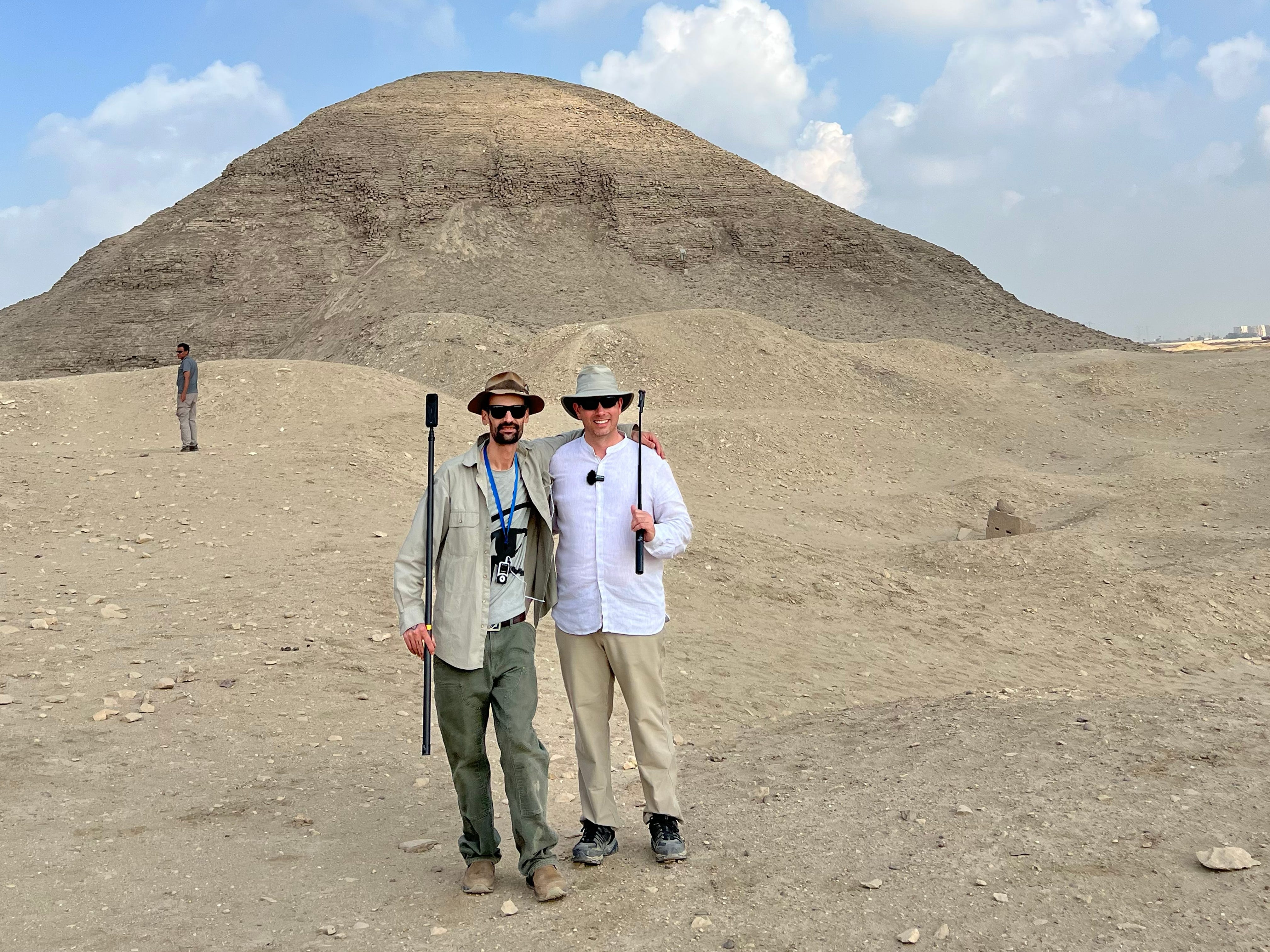
On the surface, the site didn’t look like much other than the crumbling pyramid, however, this is due to the surface structures having long since been pillaged over the centuries, starting with the Romans more than 1,500 years ago. There are a handful of stone blocks and pieces of pillars left, but much like Abu Ghorab during our private tour on Day 0, the site’s grandeur has been lost to time. What it would have been to see when it was in its full glory! In 1888, English Egyptologist Sit Flinders Petrie measured a stone floor under the site at 304 x 244 meters which he determined to be the foundation for the labyrinth, but an additional enclosing wall measured 385 x 158 meters or 1,283 x 518 feet. And now, nearly everything within that wall is gone.
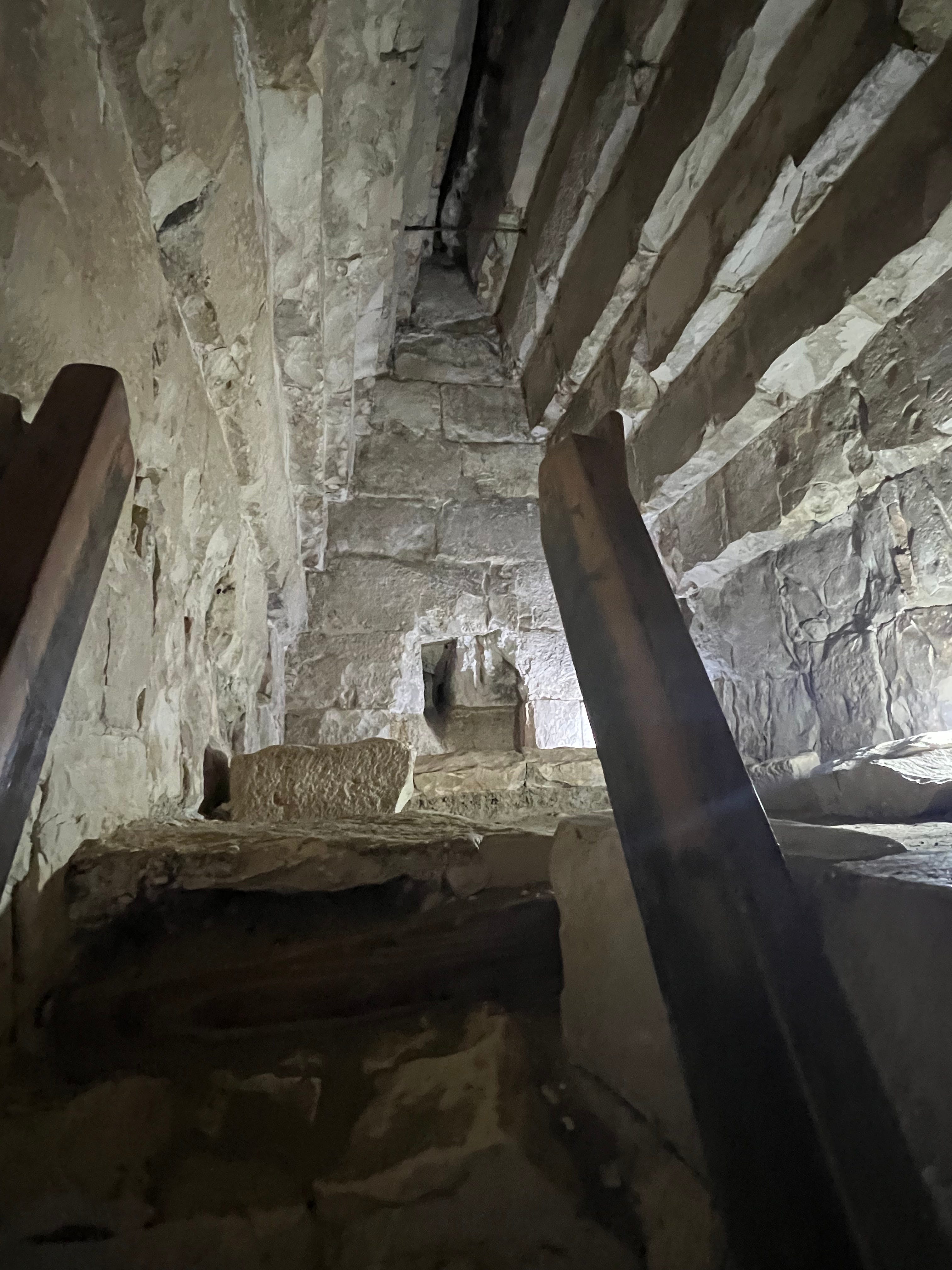
Fortunately, the scans have shown there to be something large and cavernous underneath that huge stone floor, so maybe not all is lost … but it’s certainly underwater. In the early 1800s, a canal was cut through the labyrinth area, and eerily close to the pyramid, to divert water to northeastern Faiyum. Unfortunately, this water, undoubtably, floods the labyrinth, and the pyramid is accessible for only a couple dozen feet until flood waters block passage any further down. On one hand, these flood waters may have prevented modern pillaging of the interior, but they also prevent any further exploration, and probes into the water have shown additional blockage by collapsed stone. We did venture down the corridor, however, until we met with that water.


The labyrinth area that has survived looks like some sort of bizarre checkerboard with squared depressions separated by mounds of sand with the aforementioned scattered blocks strewn about. My exploratory juices were flowing when I gazed upon the site, knowing there are vast numbers of secrets lying beneath just waiting to be unearthed. I would love to fully excavate the site, and hopefully, someday someone will. I just hope that’s sooner rather than later.
The second stop of our day was at the “floating pyramid” of Lahun which is attributed to King Senusret II. This is an important note for our Stargates of Ancient Egypt tour since Senusret II was the father of Senusret III, our first known Stargate king of ancient Egypt’s Middle Kingdom era. (Note: You’ll always find me referring to the kings of Egypt as kings rather than pharaohs since that is what they referred to themselves as. We get the word “pharaoh” from the Greeks just like we also get word “Egypt” from them.) It doesn’t mean that we’d find stargates there, but the possible connection was there. After all, King Amenemhat III co-ruled with Senusret II for 20 years, and while you don’t find the stargate designation with Amenemhat III, the two kings, also father and son, undoubtably, would have talked about it.
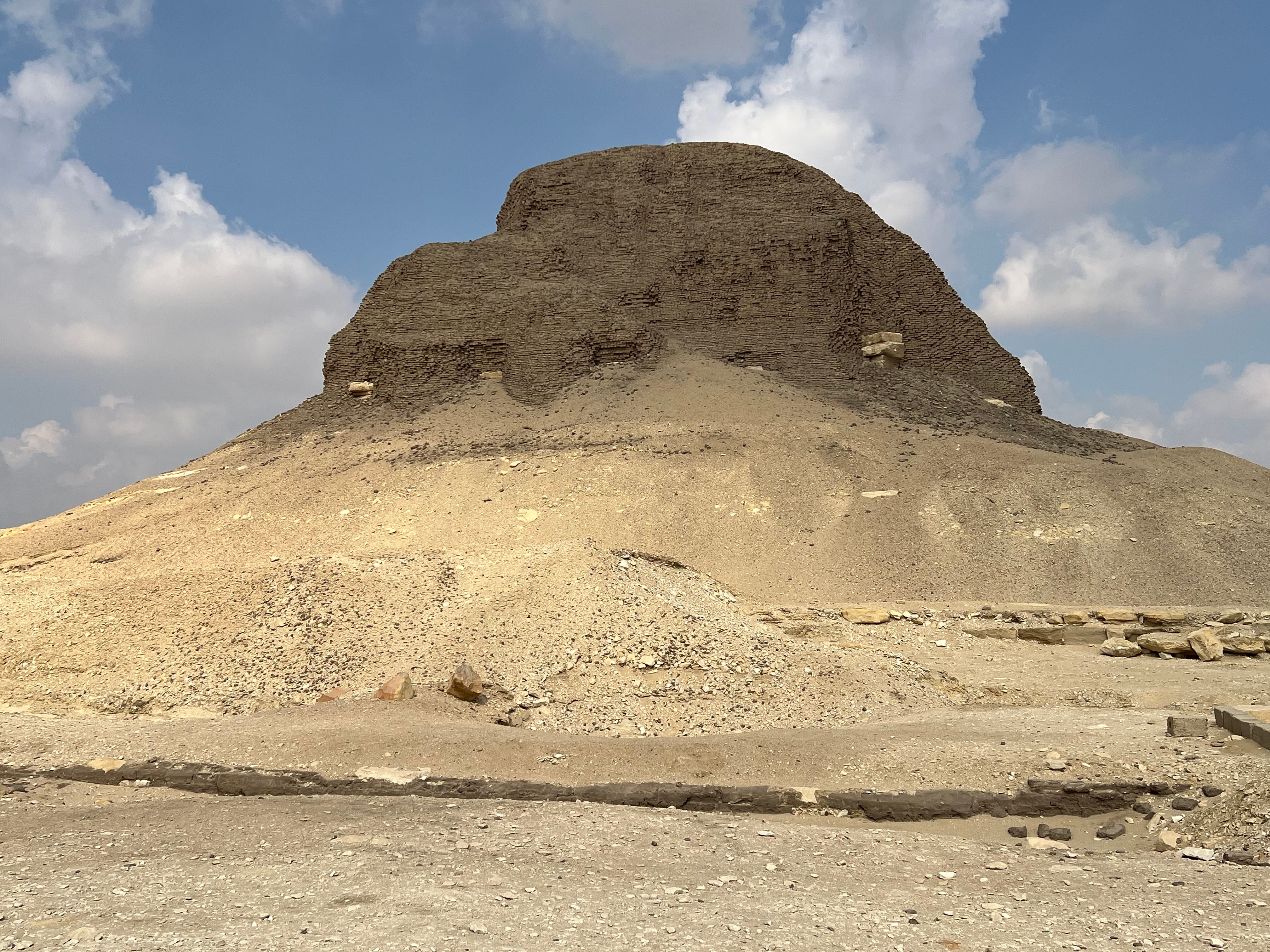
What struck me about Lahun was the last impression that the pyramid here was hiding something far more tangible underneath. The internal limestone skeleton of the structure is more of a grid with an ‘X’ on top, and the mudbrick we mostly see today stacked over it all. The mudbrick doesn’t make any sense and is crumbling away like we see with other mudbrick pyramids which, I believe, were meant to mimic the much grander pyramids that we find on the Giza Plateau and Dahshur.
The secret chamber we were allowed to see and not film (I may have captured a few photos, but to respect our chaperones’ wishes I won’t share them … just Google Lahun Pyramid and you’ll find some) contained a massive, perfectly polished, perfectly carved Aswan Rose Granite box. There was no lid to this box, no indications there had ever been a lid, and the lip around the top edge was quite different than other boxes or sarcophagi we’ve seen around Egypt. The chamber this box was within also contained a passageway which simply wrapped from one side wall, around the back, and exited at the other side wall. What in the world was the purpose of this? Mysteries abound for sure.
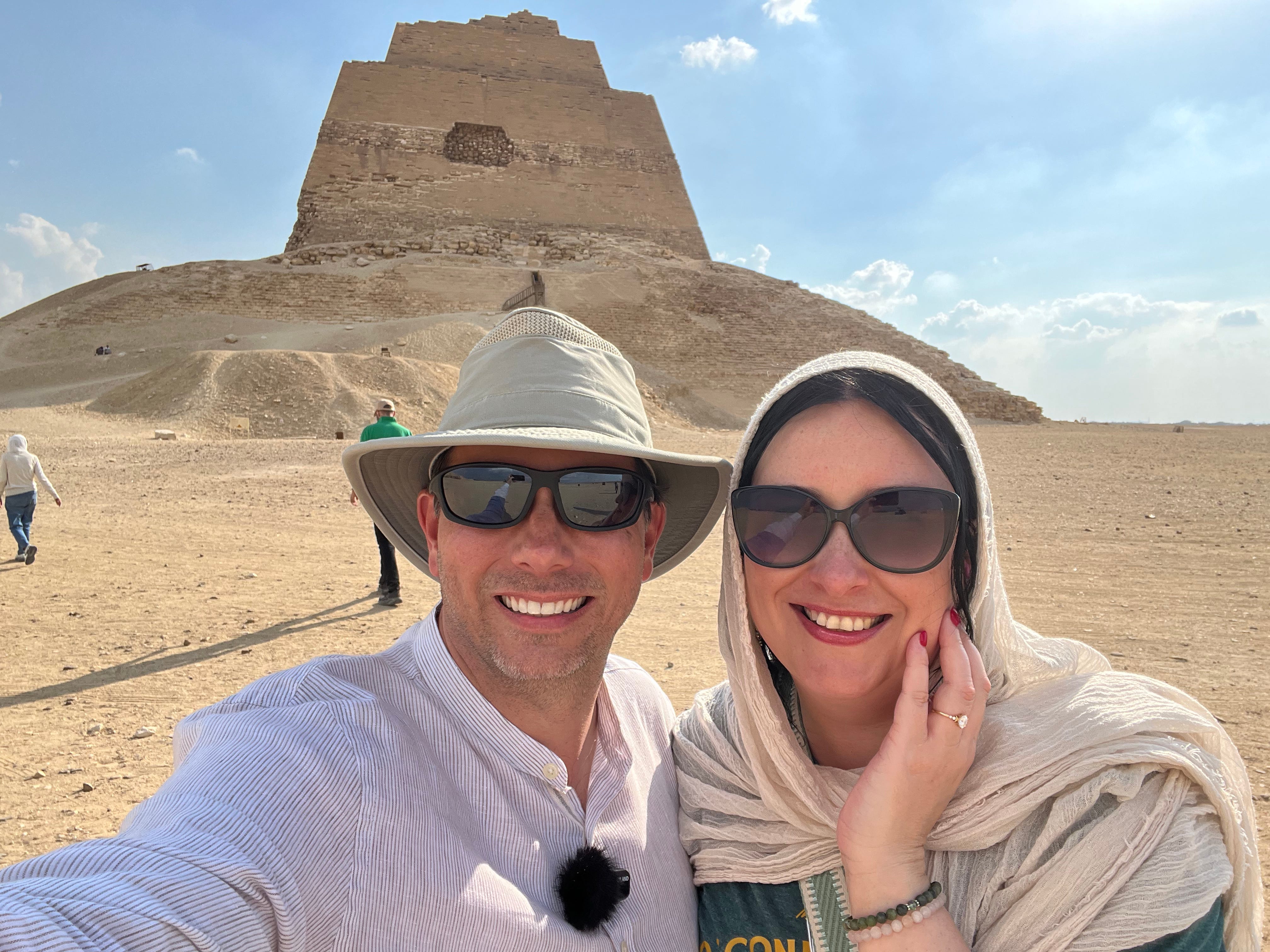
Our final stop of the day was at Maydum to explore its pyramid and Mastaba 17. However, before we entered either, standing sentinel outside was a massive box containing carvings of Anubis and the two universes. We find a similar motif on the ceiling of the sarcophagus chamber of Ramesses V and VI in the Valley of the Kings, but there it is Nut who is showing us the two worlds (for more on that, see last year’s blog article “Evidence in Egypt of a Parallel Universe?” This is deeper than just the ancient Egyptians’ concept of the Duat and the afterlife journey – and also beyond the scope of this particular article – but it was fantastic to find it, unexpectedly, here.


The Maydum experience was really a tease for future experiences throughout our tour. The climb through the pyramid is not as daunting as the next day’s Red Pyramid or the final night’s two-hour sojourn into the Great Pyramid of Giza, but within the single primary chamber we did find our corbeled ceiling and the usage of sound vibrations. A nice sacred “om” chant within helped to confirm that. The crawl into Mastaba 17 was reminiscent of past crawls into the subterranean chamber of the Great Pyramid, but its tunnel was a bit longer and its entrance passage was smaller. Finding yet another huge box in an open chamber gave me a chuckle. Of course, there was something that big down there. For a nice added bonus, we got to climb a ladder as part of the journey down into this one.
What a day! Day 2 of the Stargates of Ancient Egypt always gives us something special. The first tour took us to Tanis and Tell Basta, the second one was Alexandria, and this year we explored three incredible pyramid complexes and the legendary Egyptian Labyrinth. I can’t tell you where we’ll explore for Stargates of Ancient Egypt IV, but I can guarantee it will be another incredible day.